Skip to content
Click to Call Send us a Text
HomeSale Insurance Services

Pennsylvania Office
215 S Centerville Rd,
Lancaster, PA 17603

Get Directions

Maryland Office
1425 Clarkview Rd,
Baltimore, MD 21209

Get Directions

Get a Quote

Start your free quote now!

Moving from PA to MD? Your Complete Guide to Insurance Changes

Moving from Pennsylvania to Maryland? Learn exactly how to handle your auto insurance, home insurance, MVA inspections, and excise taxes to avoid penalties.

Moving across state lines is an exciting milestone, but transitioning between Pennsylvania and Maryland comes with specific regulatory hurdles that can catch drivers and homeowners off guard. At Homesale Insurance, we serve clients from Harrisburg and Lancaster all the way down to Westminster and the Baltimore suburbs. We know this corridor intimately.

If you’re asking, “What happens to my insurance when I move from PA to MD?”—here is your complete, step-by-step guide.

1. The 60-Day MVA Window (Do Not Miss This)

When you establish residency in Maryland, you have exactly 60 days to register your vehicle with the Maryland Motor Vehicle Administration (MVA). If you fail to do this, you risk facing a penalty tax of 6% of your vehicle’s current value.

Before you go to the MVA, you must have a valid Maryland auto insurance policy in place. Maryland requires your insurance provider to electronically verify your coverage with the state.

2. The Maryland Safety Inspection

Unlike Pennsylvania’s annual safety and emissions inspections, Maryland requires a one-time, highly rigorous safety inspection when you bring an out-of-state vehicle into the state.

  • Action Step: You must pass this inspection at a licensed Maryland inspection station before you can get your hard plates. Your Homesale Insurance agent can help you time your policy start date perfectly to align with your inspection schedule.

3. Auto Insurance Minimums: PA vs. MD

When you switch your policy, you will notice differences in coverage minimums.

  • Pennsylvania: Requires $15,000 for injury/death of one person, $30,000 for injury/death of more than one person, and $5,000 for property damage. PA also utilizes a “Choice No-Fault” system (Limited vs. Full Tort).
  • Maryland: Requires higher minimums: $30,000 for injury/death of one person, $60,000 for injury/death of two or more people, and $15,000 for property damage. MD operates under a traditional “At-Fault” system.

Because of the shift from No-Fault to At-Fault, and the increased minimums, it is critical to have an independent agent shop your rates to ensure your premium doesn’t spike.

4. Homeowners Insurance: Inland PA vs. Coastal MD

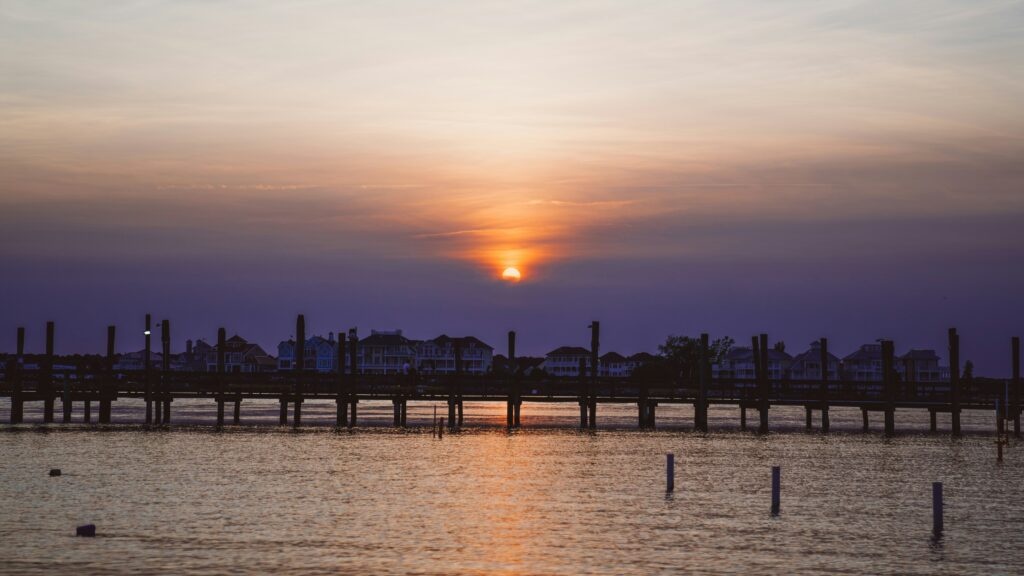
If you are moving from a central PA city like Carlisle or Camp Hill down toward the Chesapeake Bay or Ocean City, your home insurance risk profile changes completely.

  • Wind and Water: Properties on the water or very close to the Chesapeake Bay or Ocean City, Maryland are often subject to different windstorm deductibles and flood risks compared to central PA. Standard homeowners insurance does not cover flooding. If your new MD home is in a flood zone, we will need to secure a separate policy through the National Flood Insurance Program (NFIP) or a private carrier.

Let Us Handle the Transition

Dealing with the MVA and closing on a new house is enough work. You don’t need to spend hours on hold with 1-800 numbers trying to coordinate your policy switch. Because Homesale Insurance is licensed and deeply embedded in both PA and MD, we can seamlessly cancel your PA policies and bind your MD policies on the exact day you need them.

Contact Homesale Insurance today for a free state-to-state transition review.
The Maryland to Pennsylvania Insurance Checklist: 5 Gaps You Must Close

Moving across the Mason-Dixon line involves more than just a new zip code. Pennsylvania’s insurance landscape operates differently than Maryland’s, particularly regarding your “Right to Sue” in auto accidents and unique regional property risks like sinkholes. Use this checklist to ensure your coverage crosses the border safely.

1. The Auto Insurance “Tort” Choice (The Biggest Change)

In Maryland, you have an unrestricted right to seek compensation after an accident. In Pennsylvania, you must choose a “Tort Option.”

  • Select Full Tort vs. Limited Tort:
    • Full Tort: Maintains your unrestricted right to sue for pain and suffering.
    • Limited Tort: Lowers your premium but restricts your legal rights unless the injury is “serious” as defined by law.
  • Update Your Medical Benefits (PIP): PA requires a minimum of $5,000 in Medical Benefits. This is a mandatory coverage.
  • PA Vehicle Inspection & Registration: You have 20 days after titling your vehicle in PA to get it inspected. Your insurance must be active and PA-specific before you can register the vehicle.

2. Homeowners Insurance: The “Ground” Factor

Maryland’s coastal and suburban risks differ from Pennsylvania’s limestone-heavy geography.

  • Add Sinkhole Coverage: If you are moving to Lancaster, York, or the Cumberland Valley, you are in a high-risk area for sinkholes. Standard homeowners policies exclude earth movement. Ask for a specific Sinkhole Endorsement.
  • Check for Mine Subsidence: Moving toward Western PA or specific parts of Schuylkill County? You may need Mine Subsidence Insurance (MSI).
  • Water Backup/Sump Pump Overflow: With PA’s older infrastructure and basement-heavy homes in Lancaster and Reading, ensure you have a water backup coverage.

Common Questions About Moving Insurance from MD to PA:

  • Do I need a new insurance agent when moving from MD to PA? Maybe. Your agent must be licensed in the state where the risk (your home or car) is located. Homesale Insurance is licensed in both PA and MD, making us the ideal “border-crossing” partner.
  • Is insurance cheaper in PA or MD? It varies by zip code. While MD often has higher liability costs in metro areas like Baltimore, PA’s “Tort” system and specific regional risks like sinkholes can impact your premium.

Contact one of our Homesale Insurance Advisors today. We are ready to help you with your move from Maryland to Pennsylvania. 800-425-5130. You can also click on the QR code below to get started.

Buying a Historic Home in Lancaster? 3 Insurance Gaps That Could Cost You.

Walking through the streets of Lancaster City or Lititz, you’ll often see those iron “Fire Marks” on old brick facades. Back then, they were a guarantee that fire brigades would save your home. Today, protection is a bit more complex. If you are buying a home built before 1940, a standard policy might leave you exposed.

1. The “Rebuild” vs. “Repair” Trap Many insurers provide replacement cost coverage. This will pay for the cost to replace/rebuild your home if it was damaged. But in Lancaster, replacing hand-carved molding, slate roofing, or horse-hair plaster is very unique and not typically seen in modern houses. you might need extended dwelling coverage or functional replacement cost

2. The “Hidden” Systems (Knob & Tube) We love the charm of exposed brick, but we hate what’s often behind it: Knob and Tube wiring. Many carriers will flat-out refuse to insure it due to fire risk. At Homesale Insurance, we know which carriers specialize in historic PA homes and can help you navigate inspection requirements without losing the deal.

3. The Sinkhole Reality Pennsylvania sits on limestone, making us one of the top states for sinkhole activity. Standard home insurance does typically does cover earth movement. You could be fully financially responsible for the repairs—unless you have a specific Sinkhole Endorsement.

Lancaster FAQ

  • Q: Do I really need sinkhole insurance in Lancaster County?
    • A: Yes. Pennsylvania is prone to sinkholes due to our limestone bedrock (karst terrain). Standard home policies exclude “earth movement.” We highly recommend adding a specific Sinkhole Endorsement to protect your foundation.
  • Q: Does my auto insurance cover horse and buggy accidents?
    • A: Yes, a collision with a buggy is treated like a collision with another vehicle. However, given the severity of these accidents, we recommend higher limits to protect your assets from lawsuits.

More Than Four Walls: Defending the Homes We Love

Winter in the Mid-Atlantic is a bit of a “choose your own adventure” story. For those of us at Homesale Insurance, we see this play out every year from our offices in Pennsylvania and Maryland.

Whether you’re in a historic brick rowhome in Fells Point or a sprawling farmhouse in Lititz, here is what you need to know about our local winter weather—and how to protect your investment.

The Lancaster Winter: The Long, White Blanket

In Lancaster, we don’t just get snow; we get a “season.” Historically, Lancaster County averages about 27.5 inches of snow per year. The temperatures here are consistently colder, often dipping into the low 20s.

  • The Insurance Risk: Ice Dams. Because Lancaster stays colder longer, snow on your roof can melt and refreeze at the gutters, forcing water under your shingles and into your attic.
  • Pro Tip: Ensure your attic is well-insulated and ventilated. Keeping the attic air cold prevents that freeze-thaw cycle that leads to interior water damage.

The Baltimore Winter: The Coastal Wildcard

Baltimore’s winter is a different beast. With average highs around 47°F, the snow often turns to slush or “wintry mix” within hours. However, don’t let the milder average fool you—Baltimore averages about 20 inches of snow, often coming in heavy, wet bursts.

  • The Insurance Risk: Heavy Snow Loads & Liability. Wet snow is significantly heavier than the “powder” found further north. This puts immense pressure on older roofs and porch overhangs. Additionally, the constant melting and refreezing in the city creates “black ice” on sidewalks.
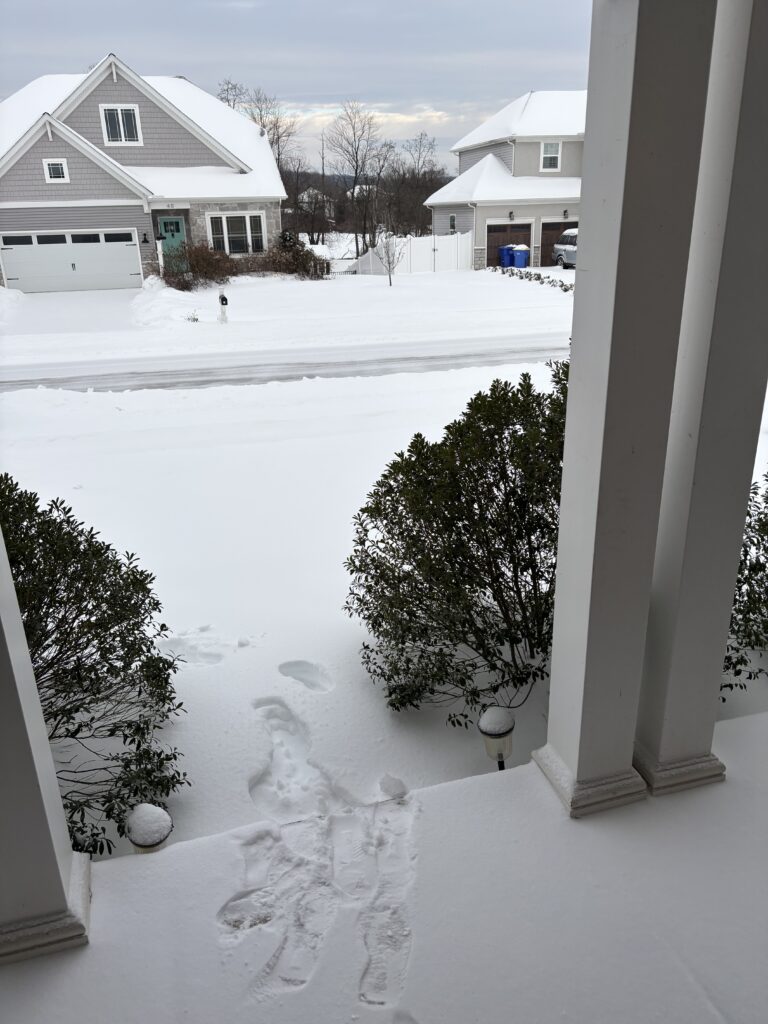
  • Pro Tip: Clear your walkways early and often. As a homeowner, you have a responsibility to keep your property safe for mail carriers and neighbors. If you do not clear the walkways and someone slips and falls that will fall back into your Homeowners Insurance. Do not have a sidewalk that looks like the one below. One of our team members clearly has not gotten to shoveling yet.

3 “Must-Dos” for Every Homesale Client

Regardless of which side of the Mason-Dixon line you call home, these three steps are your best defense against a winter claim:

  1. The “Slow Drip” Defense: If temperatures are forecasted to stay below freezing, let your furthest faucet have a tiny drip. It’s a lot cheaper than a burst pipe claim!
  2. Clear the Car Top: We’ve all seen it on Route 30 or I-95—a “snow bomb” flying off a car roof. Clear your roof completely to avoid a liability claim or a ticket.
  3. Review Your Policy: Does your current policy cover “Weight of Ice and Snow”? Many basic policies have nuances.

At Homesale Insurance, we protect the homes that Homesale Realty helps you find. We know these neighborhoods because we live in them, too.

  • American Modern Insurance Group
  • Assurant Flood
  • Berkshire Hathaway Guard Ins Co
  • Chesapeake Employers Insurance
  • Chubb & Son Inc./ACE
  • Donegal Insurance
  • Encompass Insurance Co
  • Farmers of Salem
  • Foremost
  • Foremost Specialty
  • Frederick Mutual Insurance Co
  • Grange Insurance Group
  • Liberty Mutual Insurance Company
  • Lititz Mutual
  • millers mutual
  • Narragansett Bay Insurance CO
  • Nationwide
  • Openly
  • Phila Contributionship Ins
  • Plymouth Rock Assurance
  • Progressive
  • RLI
  • Safeco
  • Travelers
  • USLI
  • Westfield Insurance Company
  • Wright Insurance Group

Peace of Mind

With HomeSale Insurance Services, get fast, reliable, online quotes for your
insurance peace of mind.

Get Started!